

About “Samuel Jackson”
The customer experience used to be measured largely by how easily people could find a product, complete a purchase, and receive what they ordered. Today, the experience begins much earlier. Customers want to understand what they are considering before they commit to a purchase, particularly when they cannot physically touch, examine, or test the product.
This has changed the role of product information. Descriptions, photographs, specifications, reviews, videos, and comparison tools are no longer simply supporting elements around a transaction. They are becoming important parts of the experience itself.
The challenge is that understanding a physical product through a digital screen is not always straightforward. A customer can read every specification and view every photograph while still wondering how the product will look, feel, fit, or function in a real situation.
That gap is creating interest in more interactive forms of product presentation. Instead of treating product information as something customers simply consume, businesses can make it something they actively explore.
The Buying Experience Starts With Questions
Customers rarely arrive at a product page without questions. Even when they are already interested in an item, they may want to know whether its dimensions are suitable, whether its appearance matches the photographs, or whether its design will work in their environment.
These questions shape the customer experience.
If the answers are easy to find and understand, the research process can feel natural. If customers have to search across multiple pages or rely heavily on imagination, the experience can become more demanding.
This is why product understanding deserves to be considered part of the customer journey rather than an afterthought.
The better customers understand a product, the easier it becomes for them to determine whether it belongs in their lives.
Physical Encounters Can Lead Directly Into Digital Experiences
The customer journey does not always begin online. A shopper might first encounter a product in a store, at an event, on packaging, in a catalog, or through an outdoor advertisement.
These moments traditionally have limited informational capacity. A physical display can show the product, but space for detailed information is often restricted.
Digital connections can expand that experience.
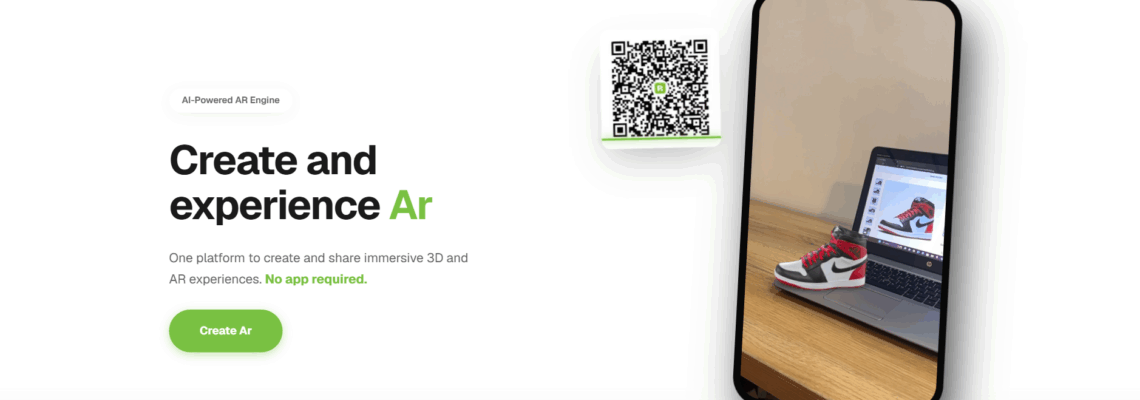
An augmented reality qr code can provide a simple bridge between a physical encounter and a richer digital experience. By scanning a code, customers can move from looking at a product to exploring additional information through their smartphones.
This creates continuity between physical and digital environments.
Instead of seeing a product in one place and having to begin a separate search later, customers can continue their exploration from the same physical touchpoint that generated their interest.
Product Information Needs More Than More Words
When customers struggle to understand a product, the obvious response is often to add more information.
Businesses may expand descriptions, add technical specifications, publish additional FAQs, or provide longer explanations.
But more words do not always create more understanding.
Some product characteristics are inherently visual or spatial. A sentence can describe dimensions, but a customer may understand those dimensions more easily when they can see the product in proportion to other objects.
Similarly, a description can explain a particular design feature, but an interactive visual representation can allow customers to inspect it directly.
The solution is therefore not always additional content. Sometimes it is a different way of presenting the content that already exists.
A Product Photograph Is Only One View
Photography remains essential to online commerce because it gives customers an immediate visual impression.
However, a photograph is still a fixed viewpoint.
Customers cannot rotate it or inspect an unseen side. They cannot move closer to examine the product from another angle unless another photograph has been provided.
Businesses can solve part of this problem by offering image galleries with multiple perspectives, but customers remain dependent on the views selected by the seller.
Interactive 3D visualization changes that relationship.
Instead of receiving a limited number of viewpoints, customers can potentially manipulate the digital representation themselves. They can rotate it, inspect its form, and spend time examining the aspects that interest them.
The experience becomes closer to product examination.
Existing Visual Content Can Support New Experiences
Creating interactive product content can appear difficult when a business has a large catalog.
Companies may have hundreds or thousands of products, each requiring photographs and other marketing assets. Building separate 3D content from scratch for every item could become a substantial undertaking.
This is where image-based workflows can become valuable.
Technology that can convert image to 3D model can provide a pathway from existing product photography toward interactive digital visualization. Instead of treating photographs as content with only one purpose, businesses can explore ways to reuse them as part of a broader product-experience strategy.
This can be especially useful for companies that already maintain extensive visual libraries.
The approach also encourages businesses to think differently about content production. A photograph can serve the product page today while potentially contributing to a 3D experience tomorrow.
Understanding Can Happen Through Interaction
Customers often learn by interacting with things.
In a physical store, they may pick up an object, turn it around, examine its details, compare it with another item, or place it beside something else.
Digital commerce cannot reproduce every aspect of physical interaction, but it can introduce new forms of interaction.
A customer can rotate a digital product, inspect its structure, or explore it from different viewpoints.
This gives shoppers more control over the learning process.
Instead of following a fixed sequence created by the website, they can decide which aspects deserve attention.
That makes the experience more responsive to individual curiosity.
Context Gives Product Information More Meaning
A product can look completely different when considered in isolation compared with how it might appear in its intended environment.
This is one reason augmented reality can become valuable in digital product experiences.
A customer shopping for furniture, décor, equipment, or other physical products may want to understand how an object relates to the space around it.
Using a smartphone camera, an interactive experience can potentially bring the digital product into a physical context.
This gives customers another way to think about scale, placement, and visual compatibility.
Rather than imagining the product entirely from a product photograph, they can explore it in relation to their surroundings.
The Customer Experience Extends Beyond the Product Page
A strong product experience does not necessarily begin and end on an e-commerce website.
It can move across different environments.
A customer might discover a product through social media, encounter it in a store, scan packaging, open a product page, interact with a 3D model, and then return later to complete the purchase.
Each interaction contributes to the overall customer experience.
This makes consistency important. The information customers receive through physical marketing, websites, and interactive experiences should reinforce rather than contradict one another.
When digital and physical touchpoints are connected, customers can move between them without feeling that they are starting their research from scratch.
Mobile Devices Can Become Product Exploration Tools
The smartphone has changed how people access information. Customers can search for products while standing in stores, compare prices while browsing shelves, and read reviews while considering a purchase.
Interactive product experiences can build naturally around this behavior.
A smartphone camera can become a tool for accessing augmented reality. A browser can provide the environment for exploring a digital product. A QR code or link can create the initial connection.
This approach keeps product exploration close to the devices customers already use.
It also allows businesses to introduce richer experiences without necessarily requiring customers to adopt a completely different shopping process.
Removing Extra Steps Can Strengthen Engagement
Accessibility is an important part of customer experience.
Even an impressive digital experience may struggle to attract users if reaching it requires too many steps. Customers may not want to install an application, create an account, or navigate through several pages simply to investigate one product.
Browser-based experiences can reduce some of that friction.
A customer can follow a link or scan a code and begin exploring through a familiar mobile environment.
This can make interactive product experiences easier to connect with campaigns, physical displays, packaging, and online product pages.
The technology becomes less of a separate destination and more of a natural extension of the customer journey.
Visualization Can Support Different Types of Shoppers
Not every customer researches products in the same way.
Some people want to understand the overall appearance first. Others care about technical specifications. Some focus on size, while others are interested in configuration or design details.
Interactive experiences can accommodate these different preferences by allowing customers to explore at their own pace.
Someone who only wants a quick visual check can do that quickly. Another shopper who wants to inspect every side of a product can spend more time exploring.
This flexibility is useful because it puts the customer in control of the depth of the experience.
Product Education Can Reduce the Distance Between Interest and Confidence
Interest alone does not always lead to a purchase.
Customers often need to develop confidence that what they are considering matches their expectations.
Product understanding contributes to that process.
When customers can examine an item more closely, visualize its proportions, and access relevant information in context, they have more tools for evaluating it.
This does not guarantee a purchase, nor should interactive content be treated as a replacement for honest product information. Instead, it gives customers another method of understanding what they are considering.
The experience becomes educational as well as promotional.
Interactive Experiences Can Make Choice More Visual
The principle of interactive product understanding extends into other customer decisions.
Restaurants, for example, ask customers to choose from a range of options based largely on descriptions and photographs. Digital experiences can make those choices more visual. augmented reality menus are one example of how customers can interact with information before making a selection.
Rather than relying entirely on names and written descriptions, customers can potentially explore visual representations of available options.
The concept illustrates a wider shift in digital experiences: information does not always have to remain static to be useful.
Customer Experience Is Also About Understanding
Businesses often focus on the visible parts of customer experience: website design, navigation, checkout speed, delivery, customer service, and communication.
Product understanding deserves a place alongside those elements.
If customers cannot clearly understand what they are buying, even a well-designed purchasing process may leave important questions unresolved.
Interactive content can help address those questions.
It allows businesses to provide more than descriptions without overwhelming customers with additional text. It creates opportunities for exploration while keeping traditional product information available for those who need it.
This makes the experience more flexible.
The Product Can Become the Center of the Experience
As digital commerce evolves, the product itself is becoming a more interactive part of the customer journey.
Instead of simply presenting a product through a collection of photographs, businesses can create experiences where customers examine, manipulate, visualize, and explore it.
This does not require abandoning traditional e-commerce principles.
A product page can still contain pricing, specifications, reviews, descriptions, and purchasing options. Interactive content can sit alongside these elements and provide an additional layer for customers who want to investigate further.
The product becomes the center of a broader experience rather than just an image surrounded by information.
Designing Around Understanding Instead of Decoration
Interactive technology can easily become decorative if it is added without a clear purpose.
The most useful experiences begin with customer questions.
What is difficult to understand from a photograph? Which product characteristics cause uncertainty? What do customers repeatedly ask about? Where does the online experience fail to communicate something that would be obvious in person?
These questions can guide the development of interactive features.
A 3D model may be useful because customers need to inspect shape. Augmented reality may be valuable because customers need to understand scale. A connected digital experience may matter because physical packaging cannot contain enough information.
The technology should serve the understanding.
A Broader Definition of Digital Product Experience
Product experience is becoming more than the moment when a customer clicks “buy.”
It includes discovery, research, comparison, visualization, education, and confidence-building.
Interactive digital tools can contribute to each of these stages by giving customers more active ways to engage with products.
A physical package can introduce a digital experience. A product image can become a foundation for interactive 3D content. A browser can become a space for product exploration. A smartphone can connect the physical and digital worlds.
Together, these possibilities point toward a more dynamic model of online commerce.
Making Understanding Part of the Journey
The future of product presentation may depend on recognizing that customers do not simply want access to information. They want to understand what that information means for them.
A photograph can attract attention. A description can explain. A specification can provide precision. Reviews can offer additional perspectives. Interactive visualization can connect these pieces through exploration.
When customers can actively investigate a product, the experience becomes more than a transaction pathway. It becomes an opportunity to learn.
That is why product understanding has become part of the customer experience. The businesses that treat understanding as an essential stage of the journey can create digital experiences that feel more informative, accessible, and responsive to the way people actually make decisions.
The product remains the focus, but the way customers experience it is expanding. Instead of simply showing shoppers what exists, digital commerce can give them new ways to explore why it matters, how it fits, and whether it is right for their needs.